Pillar Guide · Florida Pool Ownership · By Griff
Florida Pool Care for New Homeowners: The 2026 Guide
Hey, I'm Griff. I sell a lot of houses with pools in Florida — Coral Springs, Parkland, Weston, Davie, and up through Palm Beach County — which means I've watched a lot of new owners learn the hard way that a Florida pool is not a New England pool with palm trees behind it. Different chemistry, different pump rules, different liability picture, and a paperwork trail your insurance carrier will absolutely ask about. Whether you just closed on your first Florida home or you've owned the pool for a year and finally want to stop guessing, this is what I tell every client.
Most of what ranks for “Florida pool maintenance” is written by pool service companies trying to sell you a $180-a-month contract. Helpful in places, but it skips the part that matters when you're a homeowner: what the seller should hand over, which equipment is worth fighting for at the inspection, what the state actually requires, and where the chemistry traps live in a state with this much sun and this much rain. So we'll cover all of it — chemicals, equipment, weekly rhythm, hiring a pro (and how to know they're not robbing you), and the laws and insurance angles nobody puts in the pool-service handout.
Buying a Florida home with a pool — let me read it first
Send me the listing and I'll tell you which line items on the pool inspection are real, which are a seller-painted nothing, and what to ask for in the response. Twenty minutes, no charge.
1. Why Florida pool care is different from anywhere else
A Florida pool runs essentially year-round. There is no “closing the pool in October.” That sounds like good news until you realize what it actually means: the pump runs every day, chlorine demand never drops, and every variable that drives chemistry — UV, heat, rain, pollen — runs at a higher setting than anywhere else in the country.
- ✦UV burns through chlorine fast. Free chlorine in an unstabilized Florida pool can drop from 3 ppm to zero between breakfast and lunch on a clear summer day. That is why cyanuric acid (CYA) is not optional here — it is the sunscreen for your sanitizer.
- ✦Afternoon thunderstorms move chemistry around. A 2-inch downpour dilutes everything, knocks pH and alkalinity off, and floods the deck with organic debris and phosphates from your landscape. We test more often in June through September because of it.
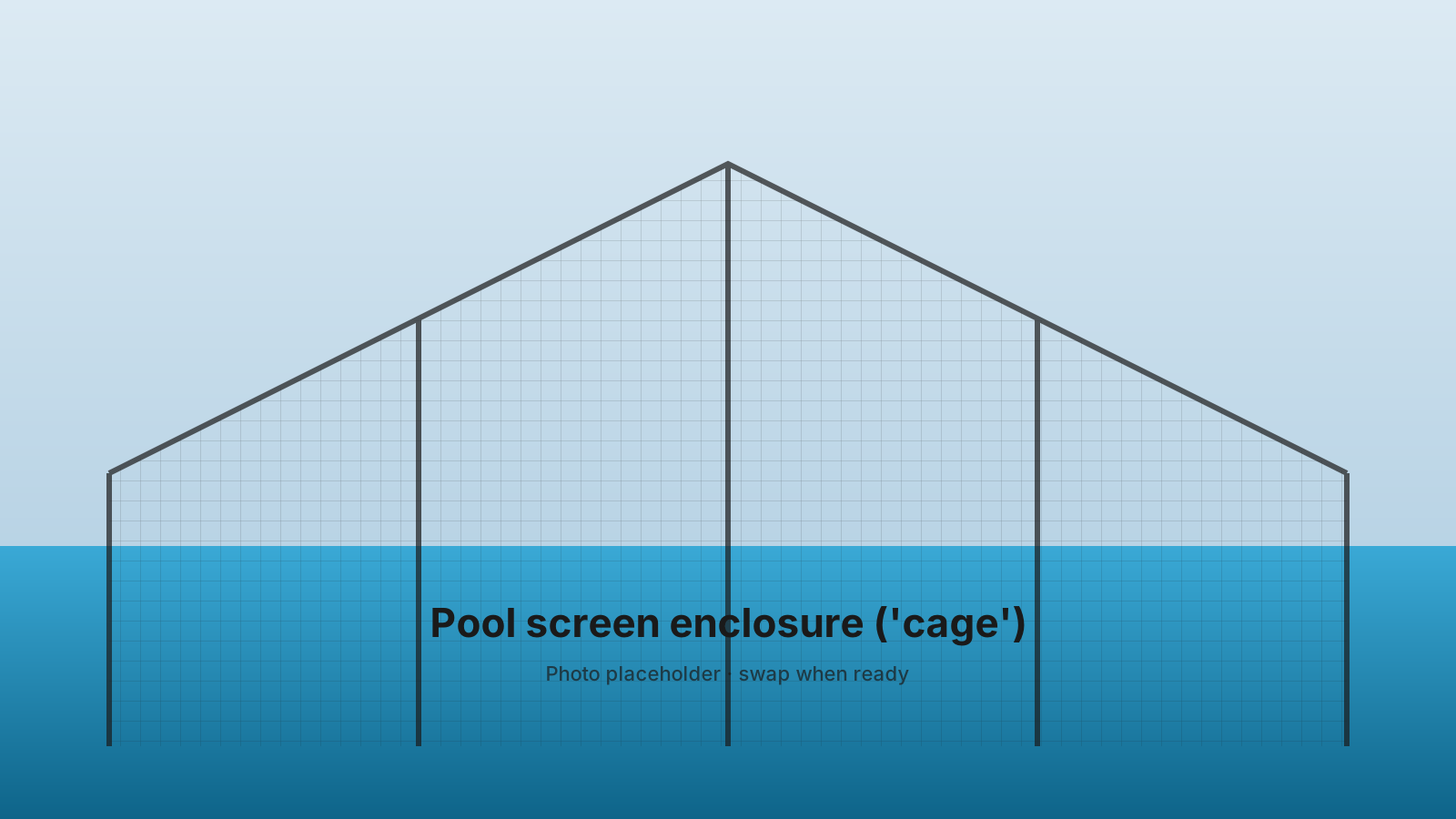
- ✦Pollen is a real season here. Oak and pine pollen in February through April is what destroys cheaper pool cleaners and clogs filters faster than anywhere up north. The screen cage helps. It does not solve it.
- ✦Hurricane season is part of the schedule. June through November the pump might run more, the chemistry definitely runs more aggressively, and you have a real prep checklist when a storm gets named.
- ✦Hard water and high humidity. Most of Florida sits on a limestone aquifer, so calcium hardness comes in high from the tap. Combined with high evaporation, scale on heater elements and salt cell plates shows up faster than in soft-water states.
The flip side: nothing about it is mysterious. Once you understand what the climate does to the chemistry, the maintenance rhythm gets boring — which is the goal.
2. The pool you inherited: types you'll find in Florida homes
About 95% of Florida pools are inground — fiberglass on newer construction, concrete or gunite on older custom homes, vinyl on a small slice of older builds. Above-ground pools do exist but they are uncommon in the markets I work because most South Florida lots already have a screen enclosure footprint built for a permanent pool.
| Type | Pros | Cons | Maintenance reality |
|---|---|---|---|
| Fiberglass | Smooth gel-coat surface, fast install, less algae purchase, no resurface for 25+ years | Limited shape options, higher upfront, repair cost when it does happen | Easiest pool to live with — light brushing, less acid demand |
| Concrete / gunite (Diamond Brite, Pebble Tec) | Custom shapes, durable, what most South Florida custom homes have | Resurface every 10–15 years ($5K–$12K), can stain and scale, more brushing | More work — weekly brushing, occasional acid washes, plaster condition is the resale issue |
| Vinyl liner | Cheapest inground option | Liner replacement every 7–12 years in Florida UV, soft surface punctures, fewer FL installers | Gentle brushing only, no metal vacuum heads, and the liner is the failure mode |
| Above-ground | Affordable, removable, no permit on most lots | Frame corrosion in Florida humidity, lower resale value-add | Similar weekly chemistry, watch the steel frame for rust where the deck meets the wall |
Real estate angle: ask the seller what type of shell and what the resurfacing or liner-replacement history looks like. A 10-year-old Diamond Brite plaster surface that has never been redone is not a deal killer — but it is a $7,000–$10,000 expense in your near future, and that should be priced into the offer or the seller credit.
3. Equipment basics: filters and pumps
The two pieces of equipment that drive everything are the filter and the pump. Get those right and the rest is chemistry.
Filter type
- Sand filter: cheapest, easiest to live with — backwash by turning a multiport valve when the pressure gauge climbs 8–10 psi over clean. Filters down to about 20–40 microns. Sand replacement every 5–7 years. Common on older South Florida builds.
- Cartridge filter: finer (10–15 microns), no backwash mess, you pull and rinse the cartridges. Expect to replace cartridges every 1–2 years in Florida pollen country. The most common filter on newer Florida construction and the one I usually recommend for the leaf and pollen load.
- DE (diatomaceous earth) filter: finest (3–5 microns), water clarity that looks unreal. More work — you backwash and recharge with DE powder. Used on higher-end builds where the owner wants showroom water.
Pump speed — and the law
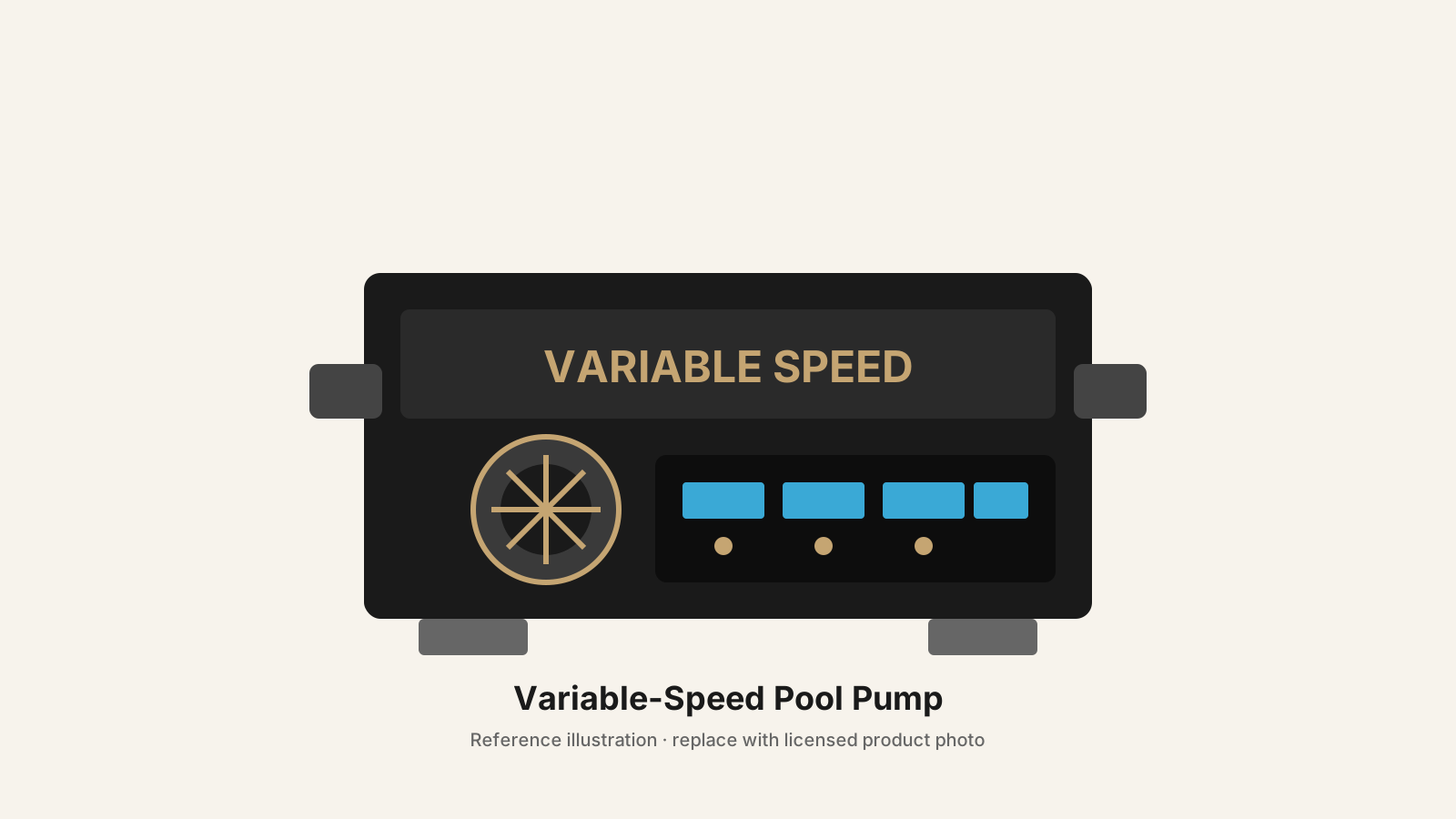
The federal Department of Energy rule effective July 19, 2021 requires variable-speed motors for most new residential pool pumps with hydraulic horsepower of 0.711 or higher — which covers nearly every standard residential pool pump on the market. The single-speed pumps that used to run all day at 3,450 RPM are no longer manufactured for sale in those sizes. If you bought a Florida home and the pump is a single-speed older unit, replacement is one of the highest-ROI upgrades you can make.
Real numbers I see on FPL bills
- Single-speed 1.5 HP, 8 hr/day: roughly $90–$140 a month in pump electricity at Florida rates.
- Variable-speed at low RPM, 10 hr/day filtration + 1 hr high RPM cleanup: roughly $20–$45 a month.
- Typical payback on a $1,200–$1,800 VS pump install: 12–30 months.
Run a variable-speed pump 8–12 hours a day total. Most of those hours can be at the lowest RPM the skimmer pulls cleanly at — usually around 1,200–1,800 RPM — with a short high-speed cycle once a day to push the robotic cleaner or backwash. Quiet, efficient, and your filter actually cleans better at low flow than at full blast.
4. Chemistry that actually matters in Florida
There are seven numbers that decide whether your pool is clean, comfortable, and staying that way. Test them weekly. Adjust in this order: alkalinity → pH → calcium → sanitizer. Skipping the order is how new owners chase pH for three weeks.
| Parameter | Chlorine pool | Saltwater | Why it matters in Florida | How to adjust |
|---|---|---|---|---|
| Free chlorine | 1–3 ppm | 1–3 ppm | Sanitizer; UV burns it off fast | Liquid chlorine, trichlor tabs, or run the salt cell |
| pH | 7.2–7.6 | 7.4–7.6 | Comfort, scale, chlorine effectiveness | Muriatic acid down · soda ash up |
| Total alkalinity | 80–120 ppm | 80–120 ppm | Buffers pH against rain | Sodium bicarbonate up · acid down |
| Calcium hardness | 200–400 ppm | 200–400 ppm | Florida tap water runs high; protects plaster & salt cell | Calcium chloride up · partial drain to lower |
| Cyanuric acid (CYA / stabilizer) | 30–50 ppm | 50–80 ppm | Sunscreen for chlorine — non-negotiable in FL | Stabilizer up · partial drain to lower |
| Phosphates | <100 ppb | <100 ppb | Algae food; FL lawns and rain push them up | Phosphate remover (lanthanum-based) |
| Salt (saltwater pools) | — | 2,700–3,400 ppm | Salt cell needs it to make chlorine | Pool salt up · partial drain to lower |
The cyanuric acid trap
CYA is the most-misunderstood number in pool chemistry. Too low and the Florida sun destroys your chlorine in hours. Too high — over 100 ppm — and you get chlorine lock, where your test reads 3 ppm but the chlorine is too bound up to actually sanitize. Algae shows up in a pool that “tested fine.” Trichlor tabs and dichlor shock both add CYA every time you use them, so it creeps up. The only way down is a partial drain. Test it monthly minimum and use cyanuric-acid-free shock (cal-hypo or liquid chlorine) when you can.
Saltwater vs traditional chlorine
Saltwater pools are popular in Florida — easier on day-to-day handling, gentler on skin and eyes. The salt cell electrolyzes salt into chlorine, so you are still running a chlorine pool, just generating it on site. Inspect and acid-clean the cell every 3 months, watch for scale, replace at 3–7 years. And remember: salt cells push pH up, so muriatic acid is your closest friend.
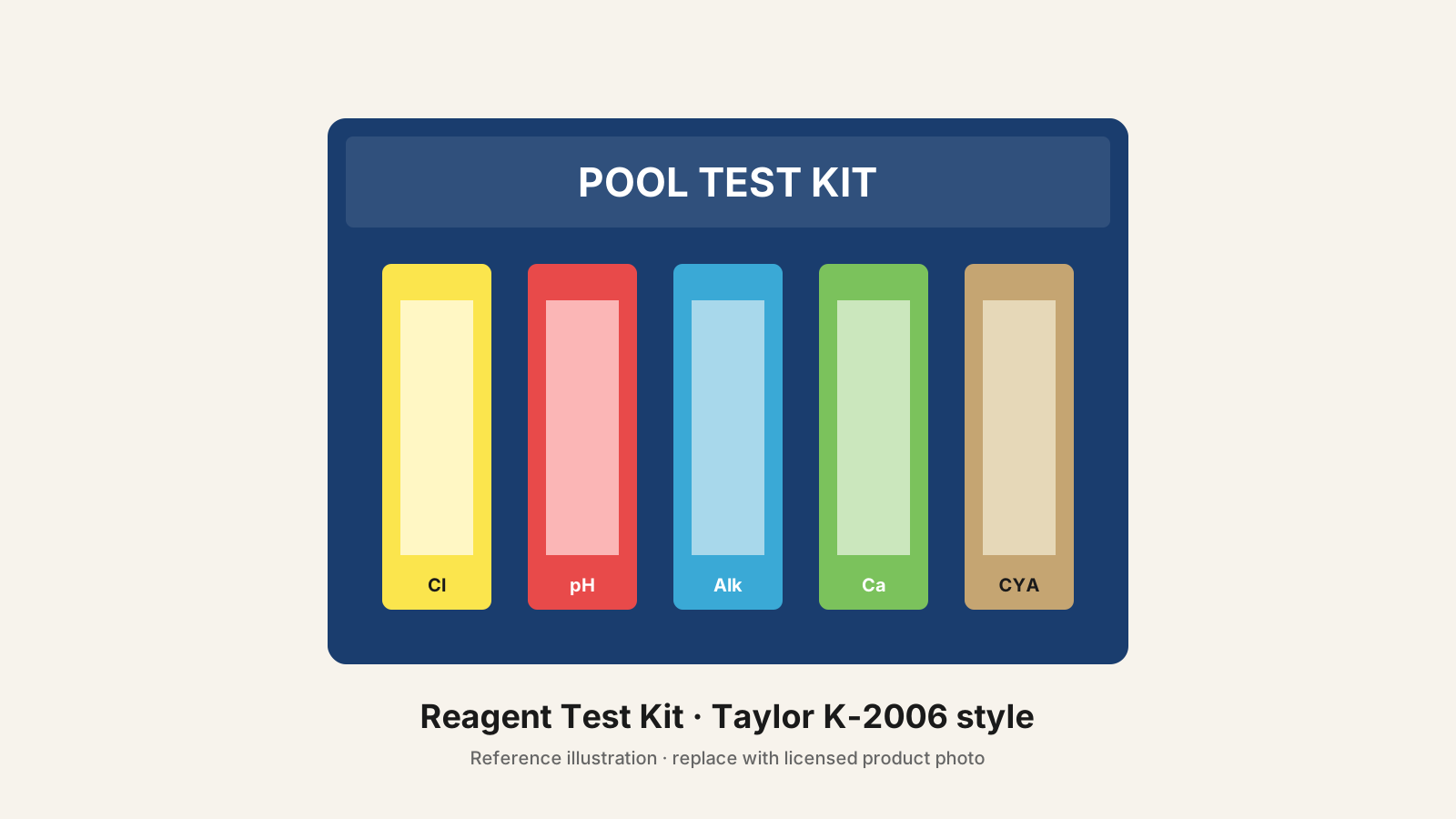
My test kit recommendation: Taylor K-2006 (chlorine pools) or K-2006C with the bigger reagent bottles if you don't mind spending $20 more once a year. Test strips are fine for a 10-second sanity check, but you cannot make decisions on them — strip color matching is too eyeball-dependent and CYA strips are particularly unreliable.
5. The Florida maintenance rhythm — daily, weekly, monthly, seasonal
The schedule is honestly less time than people think — once you get past the first month and your chemistry is dialed in.
Daily — 5 minutes
Skim leaves and bugs off the surface, empty the skimmer basket and pump basket, glance at the water level (Florida evaporation is real — running a pump dry kills it fast), and look at the water clarity. That's it.
Weekly — 25–40 minutes
Test water with the reagent kit, adjust chemistry in order (alkalinity → pH → calcium → sanitizer), brush walls and steps and any dead corners, scrub the waterline tile, and let the robotic cleaner do the floor. Vacuum manually if you don't have a robot.
Monthly — 30 minutes plus a deep filter clean
Pull cartridges and rinse them, or backwash sand / DE thoroughly. Test phosphates, cyanuric acid, and metals. Inspect O-rings and lid gaskets — a dry O-ring is how a pump loses prime in the worst possible week.
Seasonal — heavier in summer, hurricane prep June–November
Run the pump longer in summer, shock more aggressively after big rains, and watch CYA creep. When a named storm enters the cone of uncertainty: lower the water level 6–12 inches, secure or store everything that can become a projectile, super-shock, turn the pump breaker off at the panel, and wrap or relocate equipment that could flood. After the storm, skim the heavy debris before vacuuming, then shock and run the pump 24 hours.
6. Pool cleaners — what's actually worth buying
Florida pollen and leaves chew through cheaper cleaners. Here is the honest ranking from the bottom up:
- Manual pole + vacuum head: $80 setup, great for spot cleaning. Not a primary cleaner unless you really enjoy pushing a wheeled brush around.
- Suction-side cleaner: $200–$400. Plugs into the skimmer, uses pump suction. Decent on small debris, dies fast on Florida pollen and oak tassels. Stresses your pump.
- Pressure-side cleaner: $500–$900, often with a booster pump. Better at handling leaves into a debris bag. More moving parts. I rarely recommend new — it is mid-tier on cost without being top-tier on capability.
- Robotic cleaner (corded): $700–$1,800. The right answer for almost every Florida pool. Independent of the pump, scrubs walls and waterline, climbs steps, has its own filter cartridges. The Maytronics Dolphin line dominates this category for a reason — Premier, M400, M500, M600 depending on your pool size. Run it 2–3 times a week and your manual time drops to chemistry only.
- Robotic cleaner (cordless): $900–$1,500. Newer category, no cord to manage, but battery-limited runtime and replacement batteries are a real expense. Compelling for small pools.
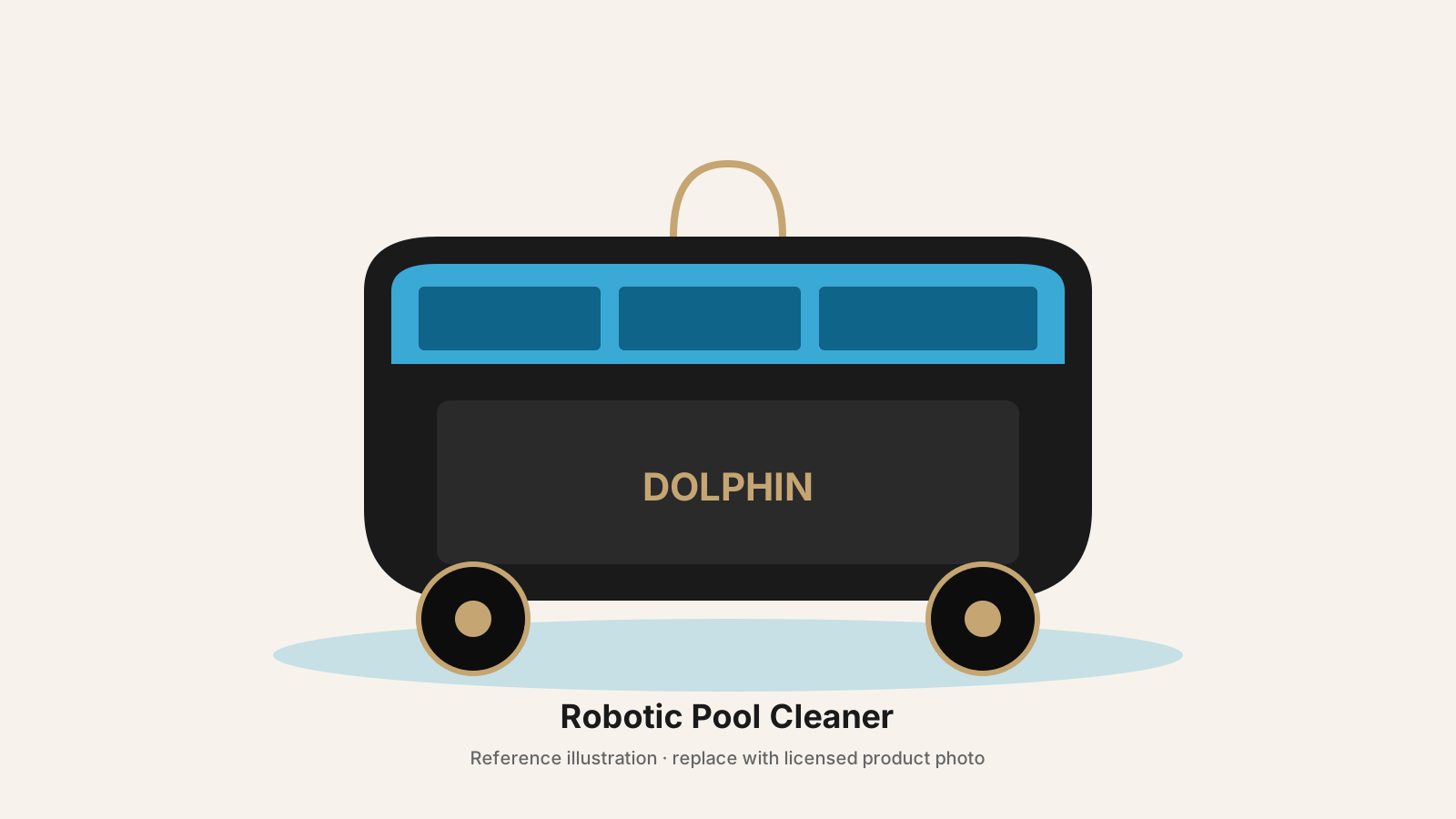
My pick for almost everyone: a corded Dolphin in the M400–M600 range. Worth every dollar, especially with a variable-speed pump where you no longer need pump-driven cleaners at all.
7. DIY vs hiring a pool service in Florida
Doing it yourself is genuinely not hard — you are looking at 30–45 minutes a week once things are dialed. The reasons to hire are time, travel schedule, or pool size. Here's what the market actually charges and what to look for:
2026 Florida pool service pricing — what I see at closing
- Chemical-only weekly (chemicals + skim, 15 min): $120–$160 a month.
- Full weekly service (chemicals + brush + vacuum + filter): $160–$240 a month.
- Larger waterfront / heavy-pollen / spa combos: $200–$280+.
- Below $90: almost certainly chemical drop-off only — you are still doing the brushing and vacuuming.
10 things to look for in a Florida pool service
- Florida pool contractor (CPC) license — verify at MyFloridaLicense.com.
- General liability and workers' comp insurance, on a current certificate.
- Technicians with CPO (Certified Pool Operator) certification.
- Itemized written contract — what they do every visit, what costs extra.
- Weekly service report you can actually read (water test numbers, what they added).
- Local Google reviews you can verify — at least 50, not a brand-new account.
- Equipment range — they should also do pumps, heaters, salt cells, not just chemicals.
- Honest about what is wear vs replacement — “your salt cell has 18 months left” not “you need a new one today.”
- Reachable by text, not just a dispatcher.
- Same tech most weeks — turnover is the #1 driver of service drift.
Red flags
- • No written contract.
- • No CPC license number on the truck or invoice.
- • Vague pricing or surprise add-ons.
- • Hostile to you wanting to test water yourself.
- • Water that drifts week-to-week — chemistry should be boring.
What they do — and what you still verify
Even on full service, test the water yourself once a week with your own kit. Take a picture of the test result. If you ever see algae or cloudiness between visits, your chemistry should explain it — and if it doesn't, the service is missing something. Walk the pool with the tech the first month. Switch services, no drama, if chemistry drifts twice in a row.
8. Florida pool laws that actually affect you
Three statute groups matter as a homeowner: the safety barrier law, the federal pump efficiency rule, and the local building code. Counties layer on top of state code, so the specifics in Broward differ from Palm Beach which differs from Orange — but the backbone is statewide.
Florida Statute 515 — the Residential Swimming Pool Safety Act
For pools constructed or substantially remodeled after October 1, 2000, Statute 515 requires the pool to be equipped with at least one of the following safety features:
- • A 4-foot pool barrier with a self-closing, self-latching gate.
- • An approved safety pool cover.
- • Required exit alarms on all doors and windows that provide direct access to the pool from the home.
- • A self-closing, self-latching device on every door from the home to the pool.
Pools built before October 2000 are typically grandfathered, but you will run into the barrier rule again at resale and at homeowners insurance renewal — many carriers now require it regardless of pool age. Treat the barrier as a yes-or-no inspection item when you buy.
Federal pump efficiency rule (DOE)
The DOE final rule effective July 19, 2021 covers most residential pool pumps. In practice it means single-speed motors above the threshold are no longer manufactured for sale, and any pump replacement on a typical Florida pool will be variable-speed. Florida adopted the federal standard via the state Energy Code.
County-by-county building reality
Permits, screen-enclosure replacement, pool deck additions, and even some equipment relocations are county-level decisions in Florida. Broward and Miami-Dade tend to be the strictest because of HVHZ (High-Velocity Hurricane Zone) wind requirements — your screen cage spec is wildly different from Central Florida. Palm Beach County permits screen cages at the building department; permits go on the property record and a buyer's title search will catch a missing one. Look up your county's pool permit history before you close — it is free, and a missing permit is a real negotiation lever.
Insurance and HOA implications: screen enclosures have a 15–25 year lifespan and most HO3 policies want documentation when one is replaced. Pool barriers come up at every renewal. HOAs in places like Parkland, Weston, and Coral Springs gated communities often have pool-cage style or color covenants — check the HOA docs before you re-screen. And never drain pool water into a stormwater drain — it is illegal statewide and worth a fine that pays for a year of chemicals.
9. The new-homeowner pool checklist — what to demand and what to do
This is the sequence I walk every Florida buyer through in the first 30 days after closing. Most steps overlap.
- 1
Day one — pull every piece of paper the previous owner has
Ask the seller for the last 90 days of chemical logs, equipment manuals, the salt cell install date, the screen enclosure permit number, the pool service contract status, and any warranty paperwork on the pump, heater, and resurfacing. If they cannot produce it, write it into the inspection response. The county permit lookup at MyFlorida or your county building department is free and tells you when the pool was permitted, when it was resurfaced, and whether the screen cage was ever pulled and re-permitted after a hurricane.
- 2
Day two — full water test before you touch a single chemical
Take a sample to a Pinch A Penny or Leslie's for a free 8-panel test, or do it yourself with a Taylor K-2006 reagent kit. You need a baseline on free chlorine, pH, total alkalinity, calcium hardness, cyanuric acid, phosphates, and (if it is a saltwater pool) salt. Adjust in this order — alkalinity, pH, calcium, sanitizer. Skipping the order is how new owners chase pH for three weeks.
- 3
Day three — eyes-on equipment inspection
Run the pump through every speed if it is variable. Listen for bearing whine and watch the filter pressure gauge. Backwash a sand or DE filter, rinse a cartridge. Check the salt cell plates for scale (cells last 3–7 years and a worn one is a $700 line item). Look at the pool light niche for water intrusion. If anything is older than 10 years and you are still inside the inspection period, get a quote from a CPC-licensed pool contractor and renegotiate.
- 4
Week one — get on a real maintenance rhythm
Brush the entire pool, vacuum the dead zones, run the pump 8–12 hours a day depending on the season, and skim daily. Test water weekly minimum. Robotic cleaner running 2–3 times a week handles the routine vacuuming so you can spend your time on chemistry and equipment instead of pushing a wheeled brush around.
- 5
Week two — verify barrier and alarm compliance
Florida Statute 515 requires a 4-foot pool barrier with a self-closing, self-latching gate, OR if the house wall is part of the barrier, qualifying door and window alarms. Walk the perimeter, check every gate latch, test the alarms. If the seller represented compliance and you find a busted latch or a missing alarm, document it with photos before you sign off — that is a real estate issue at resale and a liability issue today.
- 6
Day 30 — file the screen-enclosure / pool barrier insurance addendum
Send your homeowners insurance carrier copies of the screen enclosure permit, the pool barrier sign-off, and any roof or window updates that came with the home. A surprising number of carriers either underprice the pool because they did not know about the cage or overprice it because they assumed worst case. The paperwork swing is real money — sometimes hundreds a year.
10. Common Florida pool problems and how to fix them
Cloudy water
Almost always filter or chemistry. Check filter pressure, backwash or rinse, verify pH and alkalinity, shock with cal-hypo or liquid chlorine, run the pump 24 hours straight. If it is still cloudy after a full filter cycle, look at calcium (over-saturated water clouds) or phosphates (algae starting).
Green algae (most common)
Low chlorine, high CYA, or both. Brush first — the brush is doing 70% of the work. Triple-shock with liquid chlorine, drop CYA-bearing trichlor for a week, run the pump 24 hours, vacuum to waste once the algae drops.
Yellow / mustard algae
Chlorine-resistant. Brush hard — including everything in the pool that touches the water. Shock at 3x normal level, treat with a yellow-algaecide product, brush again every 12 hours for two days, hold elevated chlorine for a week.
Black algae
Looks like dark spots in the plaster. Tough to kill — a stainless brush and a black algaecide on the spots, shock heavily, repeat for 2–3 weeks. If it keeps coming back, the resurfacing is failing and the algae has roots in the plaster pores — that is a pool contractor call.
Calcium scale
White crusty buildup on tile and plaster. Florida tap water is hard, so it is normal in low doses. Maintain calcium 200–400 ppm and pH at the lower end of the range to slow it. A pumice stone clears it on plaster; a tile-and-grout cleaner or acid-pump treatment clears the waterline tile.
Stains (metal or organic)
Metal stains (iron, copper) — dose ascorbic acid, then a metal sequestrant, then let chemistry rebound. Organic stains (leaves) — shock plus a stain remover. Persistent stains usually want a professional acid wash.
11. What this means at the closing table
Here is the part most pool guides skip. If you are buying or selling a Florida home with a pool, the inspection report is going to flag things — and how those line items land at the negotiation table is where my job is. A few patterns I see every year:
- Resurfacing age: Diamond Brite or Pebble Tec at 12+ years is a near-future $7K–$12K expense. We either price it in or ask the seller for a credit. A buyer who skips this is going to be writing the check themselves in 18 months.
- Pump or heater age: single-speed pump older than 8 years should be a credit at minimum. Gas pool heater older than 12 years is “works today, replace soon” — make sure your offer reflects it.
- Screen enclosure age: 18+ years and you are looking at a re-screen ($2,500–$5,500) and possibly a reframe ($8K–$25K) in the next few years. Hurricane damage tends to expose what was already tired.
- Permit gaps: a screen cage replacement that was never permitted is a real title issue. So is a pool that was added without a permit. We pull the county record before due diligence ends, every time.
- Statute 515 compliance: a missing alarm, broken latch, or non-compliant gate height is a closing-day item — the seller fixes it or we credit it. Insurance carriers won't bind without it on most policies now.
In the Broward and Palm Beach pockets we work — Coral Springs, Parkland, Weston, Davie, Boca, Delray — almost every single-family home has a pool, which means almost every inspection has a pool section that runs 8–15 line items. If you're looking at a home in any of those markets, that pool inspection is one of the most important documents in your file. Having someone in your corner who knows what is real and what is paint-the-picture matters.
Read next
- → The 2026 Broward insurance deal-killers (roof, plumbing, panel) — and where the pool / cage fits in
- → Buying a Broward pool home from out of state — remote inspections and the pool video walkthrough
- → Moving to Florida from New York — the broader relocation playbook
- → Parkland vs Weston vs Coral Springs vs Davie — which Broward city fits you
- → The Florida closing process — where the pool inspection lands in the timeline
References & sources
- Florida Statutes Chapter 515 — Residential Swimming Pool Safety Act — statewide barrier, alarm, and safety-feature requirements.
- U.S. Department of Energy — Dedicated-Purpose Pool Pumps Final Rule — the federal energy-conservation standard effective July 19, 2021 covering most residential pool pumps.
- MyFloridaLicense — Construction Industry License Search — verify a Florida pool contractor (CPC) license before you hire.
- Pool & Hot Tub Alliance — Certified Pool Operator (CPO) — industry-standard pool operator certification used by most reputable Florida services.
- Florida Building Commission — Florida Building Code — statewide building code including residential pool barrier and screen-enclosure requirements.
Written by James “Griff” Griffis, Florida Real Estate License #SL3473163, at VantaSure Realty (FL Brokerage License #CQ1065669). Direct: 954-300-1057.
This guide is general homeowner information, not legal, tax, or contractor advice. Specific permitting, building code, and barrier compliance depend on your county and your individual property. For licensed work on equipment, plumbing, or screen enclosures, hire a Florida-licensed pool contractor (CPC) and verify the license at MyFloridaLicense.com before you sign.
Florida pool ownership — questions I get every week
How often should new Florida pool owners test the water?+
What chemicals do I need on day one as a new Florida pool owner?+
Is a saltwater pool actually easier to maintain in Florida?+
What is the best pool cleaner for Florida pollen and leaves?+
Do I really need a pool fence in Florida?+
Single-speed, two-speed, or variable-speed pump — which is required in Florida?+
How much does weekly pool service cost in Florida in 2026?+
What should I check when buying a Florida home with a pool?+
How do I prep a Florida pool for a hurricane?+
What is the right cyanuric acid level for a Florida pool?+
Looking at a Florida home with a pool?
Send me the listing and the inspection report. I'll tell you which pool line items are real expense, which are seller-painted nothing, and what to ask for in the response. Twenty minutes, no charge — whether you end up buying with us or not.
Last verified May 2026 · Written by Griff